Showing posts with label Diet. Show all posts

Wednesday, March 19, 2014

Hunger. The Primal Trigger!

I was listening to a podcast by Maximusmark and he was interviewing Art De Vany, who I like to call the Godfather of Paleo/Primal! Anyway, they were discussing some of the concepts in Art’s book The New Evolution Diet, and talked about hunger as a motivation for exercise. Art described studies on mice and how when they were well or over fed they were reluctant to move, but when they were hungry they would move much more. A recent study examined this in male rats and found that ghrelin increased food intake and decreased spontaneous physical activity, while agouti-related peptide (AgRP) and neuropeptide Y (NPY) both increased food intake, AgRP decreased, while NPY transiently increased spontaneous physical activity. It seems that intake of about 15-20% below calorie needs improved physical fitness in mice. It seems that it would make evolutionary sense for humans to become motivated to action (often by hormones or neurotransmitters) in order to be able to fight or flight, or procure food, win a mate, etc… This is interesting, because it’s been shown in human children that excess body weight (overweight/obesity) is associated with decreased physical activity but not the other way around. Of course in today’s modern food system, it seems difficult to eat a diet that is not obesogenic (promoting obesity). 
This got me thinking. There is a massive amount of literature on diet and hunger, specifically the satiety (fullness) effect of many foods. One study examined macronutrient composition on satiety and eating behavior as well as weight loss concluded that there were no significant differences between a high carb and a high protein iso-energetic diet protocol, however, this study did not look at carbohydrate restriction, which have been shown to absolutely associate with greater fat loss and satiety in both controlled studies and self-reported populations. Furthermore, it’s been shown that low fat diets adversely affect energy availability in the weight maintenance phase & therefore shouldn’t be used (at all in my opinion) over the long term. Furthermore, a review of all the popular diets concluded that the low carbohydrate diet protocol was the most effective at producing fat loss and metabolic improvement, at least in non-diabetic, premenopausal overweight/obese women.  I know from my experience working with thousands of clients seeking fat loss that most start out being incredibly hungry all the time when they are "dieting".  Obviously, because they are doing it wrong!  In this case, hunger, a primal cue that was essential to our survival, becomes somethings that prevents us from obtaining our goals!  That means that our approach is wrong.

There has been much research into the physiological and biochemical pathways that regulate hunger and attempts by science to control or suppress hunger, more often than not this involves a marketable product. Probably the most interesting thing to me is that a significant chunk of hunger research was done & contributed to by BIG FOOD companies. Now from a business perspective this makes sense because they profit from consumption of food products and any information that helps a company drive users to consume more will make them more profitable. Unfortunately, these "good business practices" by the food industry translates into health concerns for us including but not limited to overweight, obesity, diabetes and heart disease. In essence, the current strategies used by food companies and allowed by governments are making us fat, sick and eventually dead! Therefore, we need to limit our exposure to as many of the “processed foods” as possible.

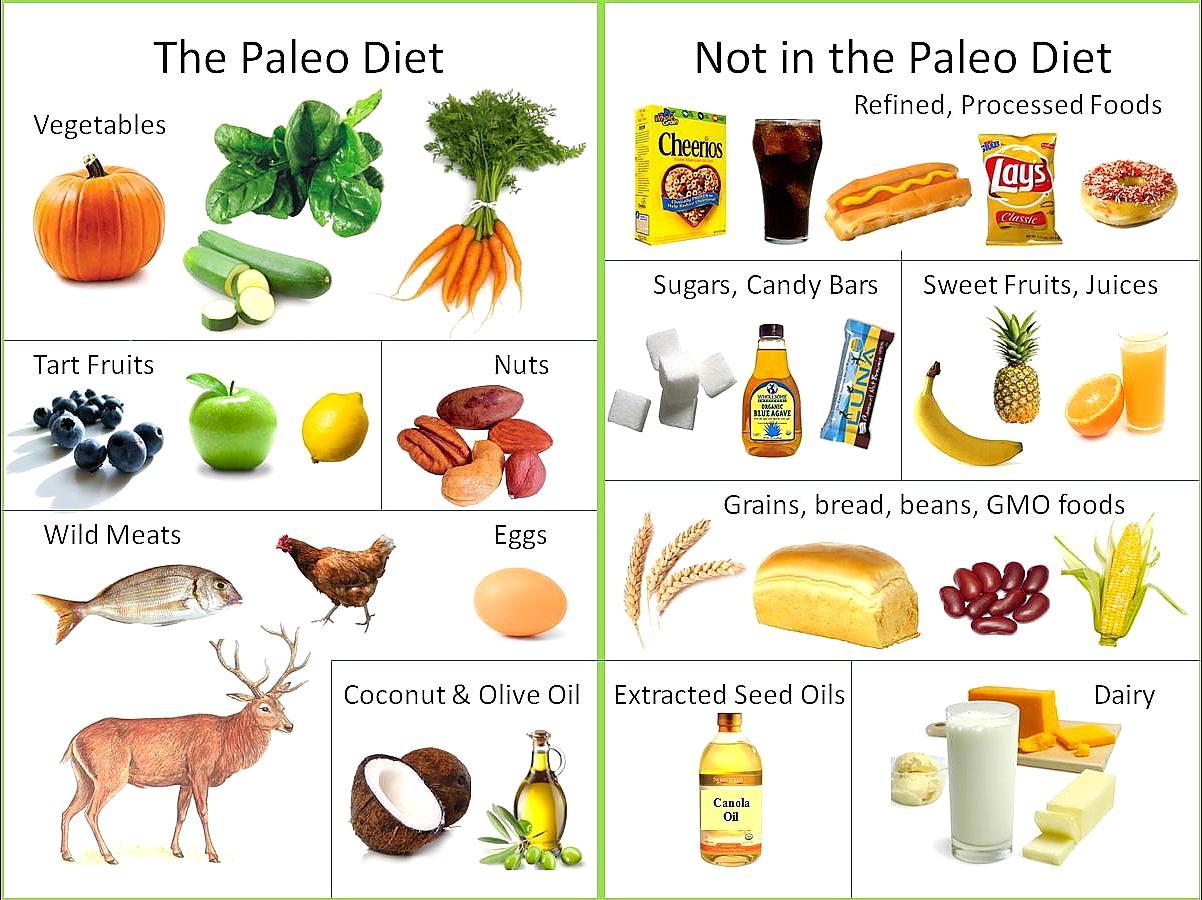
I have created a list of 4 groupings of foods that I consider processed. Obviously, if you are a Paleo purist, then you will not want to incorporate most of these, but if not, then I would suggest limiting your intake of these processed foods to not more than 3 servings per week and only if you are able to achieve your goal of optimal performance, health and longevity while doing so! There are literally hundreds of thousands of lists of processed foods out there, so rather than re-invent the wheel & add to the confusion, I’ve attempted to add general classifications of foods as well as rules that should tip you off that a particular food is “processed” significantly.
List of Processed Foods:
1) All breads, cereals & pastas - these “plant foods” are mostly GMO & are often milled (finely ground) and then pressed into shaped & cooked. In a nutshell, no pun intended, they are quite highly processed and far removed from their natural state. The only benefit that has been shown by this food group is that the fortification with folic acid has helped to decrease the incidence of neural tube defects and unfortunately, folic acid that is added in many countries has been shown to be associated with increases in colorectal cancer prevalence. This is NOT CAUSAL, but it should raise some flags. 
 
2) Sugar and sweeteners - these are highly refined products whether they have a “calorie value” or not. Both sugar and sweeteners have both been associated with weight gain. Furthermore, in my experience, clients who try to lose weight while using sweeteners are often unsuccessful or only successful for the short term. The way I would normally advise a client is that if they are currently using sugar, they need to wean down to nothing eventually. If they want to use a sweetener (artificial or natural) in the process of doing this over say a month or so, then that’s fine. But honestly, it only prolongs the inevitable, which is essentially a feeling of going cold turkey and cravings for carbs, that one must push through in order to reset the palate.
3) Liquid, pasteurized dairy - firstly, we are designed to drink human milk, and only when we are infants. Secondly, we are designed to drink raw milk, with enzyme and healthy bacterial activity, etc… Pasteurization destroys some pathogens but also destroys enzymes and kills off beneficial bacteria present as well as other micronutrients present in raw milk, including decreasing the solubility of the calcium present. This is not surprising due to the heat-lability of many proteins. Importantly, the diet of the milk producing cow needs to be considered. If that cow is consuming grass as it is designed to do, then the milk fats are healthy, whereas if the animal is consuming grains, which it is not designed to eat, then it is often sick and requires antibiotics, so the combination of pesticides, GMO grains and the pro inflammatory fats from the seed oils lead to dirty milk fats, which. If you can find a clean milk source raw or pasteurized, then use it if you like and don’t be afraid to go full fat dairy in that case. Of course, raw milk is currently illegal in North America, although, it’s the norm in other countries. I would never suggest that the current food system with mass produced dairy shift to raw production, as that would be crazy, however, if the food system shifts to more local producers (once again) and you are able to legally acquire it from a local farmer’s cow, then GO FOR IT! 
4) Fruits & Vegetable juices - specifically, I’m talking about store bought ones that are not labeled as raw. North American food safety protocols dictate that any fluid sold in stores that was once living has to be pasteurized including dairy and fruit & vegetable juices. The problem is that many of the protective benefits that are known about fruits and vegetables are believed to be eliminated be pastuerization due to the high heat. That would explain, why studies have shown that people who consume whole fruits and vegetables live longer & are healthier overall, but these benefits are not present in store bought juices because of the heating
I hope that you are able to use this list to help you achieve your goals!
In my opinion, it's not a conspiracy, it's just about making money & that includes the government.  Hopefully, one day, using research into human evolutionary physiology to elicit the response of incresaing consumption of foods, especially in light of the fact that they are destroying our health, will be illegal; but until then we have to stand on guard for ourselves and our families! Let’s not reward food companies for researching hunger triggers & using it against us!
Until next time! Remember to join the MERF movement (I MUST EAT REAL FOOD) & live and play life to the fullest!


Dan T

Tuesday, March 4, 2014

Metabolism and Mental Health

Hi everyone!

I'm back from some time away and am thrilled to announce the birth of our second daughter Kathryn!  Kudos to my beautiful wife who delivered her naturally and has been an amazing trooper plowing through breast feeding challenges! Let's just say, there's not a lot of sleep to go around in our home right now!

On to today's topic: Metabolism and Mental Health

I'm constantly disgusted by the preachings & teachings of many of my peers who blindly tow the economically motivated company line!  I'm speaking from both the head and the heart here!

Maybe it's not news to any of you reading this that there is something wrong with the current model of "healthy lifestyles" being touted by North American health care professionals, and I might add is still being taught as the gold standard by many of the educational institutions creating the next generation of said health care professionals!  The sad part of all this is that it's all based on poor research and worse yet, the last 2 decades of evidence has clearly shown that the food pyramids & groupings that are are NOT the answer they are touted to be and could actually be responsible for the obesity epidemic we are now facing.  Denise Minger has done an awesome job illustrating the facts as to why the USDA pyramids since the 1970's are a bad idea in her book Death by Food Pyramid.

In fact, the evidence absolutely opposes regular consumption of a high carb, low fat diet for any prolonged period of time, suggesting that the increased prevalence of mental health conditions over the last 50 years is due to the shifting of public consumption to a low fat, high carbohydrate diet vs. the more traditional, low carb, high fat one (Riby LM and Riby DM, 2013)!

I work at a mental health hospital and I see significant overlap between the mental health conditions that lead to hospitalization (i.e. Anxiety, Depression, Bipolar Disorder, Schizophrenia, Schizoaffective Disorder, Bipolar Affective Disorder, etc...) and the metabolic syndrome that has also become increasingly prevalent in our modern society.  FYI, Metabolic syndrome is defined by having 3 or more of the following conditions (as defined on the Diabetes Canada website):
  • High fasting blood glucose levels (5.6 mmol/L or higher)
  • High blood pressure (130/85 mm Hg or higher)
  • High level of triglycerides, a type of fat in your blood (1.7 mmol/L or higher)
  • Low levels of HDL, the “good” blood cholesterol (lower than 1.0 mmol/L in men or 1.3 mmol/L in women)
  • Abdominal obesity or too much fat around your waist [a waist circumference of greater than 102 cm (40 inches) in men and greater than 88 cm (35 inches) in women]
The more of these conditions you have, the higher your risks of developing type 2 diabetes and heart disease.  I can tell you from my experience, that at least 1-3 of these criteria are met by almost all the clients I come across in mental health.  It's far to common to be mere chance!  In fact, there is research outlining how these metabolic disturbances are linked with mental illness  (Carria G et al. 2014).  I think the best objective review of the evidence linking lifestyle habits with subsequent mental health issues and specifically cognitive decline is in Dr. David Perlmutter's book Grain Brain.

Furthermore, metabolic syndrome has been shown to be associated with poor memory and executive functioning in the elderly (Rouch I et al, 2014). I think we can safely assume that they are at the very least related & that nutrition and our consistent lifestyle habits are intimately involved in the pathophysiologies of these conditions.

One theory as to how this link occurs is through epigenetics or the altering of gene expression within individuals through methylation and other processes that turn on and off of various genes in the body.  Mark Sisson in his book The Primal Blueprint describes becoming a fat burning machine through altering our gene expression to do this.  Evidence is definitely starting to show that consistent lifestyle activities including diet, resistance and aerobic exercise and more do exactly this, alter gene expression of certain genes that favor fat burning and turn off others that would favor fat storage.  Epigenetic changes have been shown to occur in populations with Diabetes as well.  Interestingly, these gene expressions can be either health marker related (which can be tracked) or appetite-generating or suppressing to name a few, which can help explain how processed foods can stimulate people to over-consume them so frequently.  This phenomenon has been demonstrated clinically in a study that examined midlife diet and future phenotype expressions of Healthy Aging.


Regardless of mechanisms, there is definitely evidence that suggests we shouldn't be relying, let alone recommending high grain & refined carbohydrate intake (including grains) and that we shouldn't be restricting fat as much as we are now!

Specifically, there are a number of studies linking grain consumption to mental health issues including schizophrenia, depression and bipolar disorder.

 
I will leave you with one closing thought.  Most people know that the body is made of mostly water and if we don't get enough water daily, then we're on the road to problems; so once you understand that the brain is made of mostly fat, it shouldn't surprise you that if we don't consume adequate fat from our diet we are heading down the road to troubles with our brain!  Obviously, the types of fat matter, but this is another post in and of itself!


Anyway, I believe the time is coming for change & I am striving to advocate for it!  It will likely be many years until Government agencies climb aboard, so in the meantime, take control of your and your family's health!

Also, to any and all clinicians reading this, you should try the changes I'm talking about and advocate for change too!  To blindly move forward is irresponsible!


Till next time.  Have a great weekend & Take care!

Dan T

Monday, December 23, 2013

SMART Goal Setting Review

Tis the season for Setting Goals!

Do NOT sell yourself short! You can achieve what you set out to achieve, just be sure to create the right road map (i.e. behaviors to reach the goal).

Be sure to check out my YouTube channel coming in 2014!

www.dietitiandant.com -click on the Video tab.

Sincerely,

Dietitian Dan T

SMART GOAL SETTING

In the spirit of the Holidays, please enjoy my segment on how to set SMART goals.  Adopting this effective strategy should help to optimize your chances of successfully setting and reaching a goal rather than the business as usual New Year’s Resolutions, as you will see.  ENJOY!

Every New Years we do it...  Take a look at our lives and decided to change… something! January has the highest number of people starting lifestyle change plans, etc… However, it also has the highest percentage of these individuals who drop out, or quit!  Therefore, we examine how to set goals in a way that maximizes our chances of following through! 

SMART Acronym:
1)     Specific – Must answer the six “W” questions:
a.    Who – is involved?
b.    What – do I want to accomplish?
c.    Where – Identify a location.
d.    When – Establish a time frame.
e.    Which – Identify requirements and constraints.
f.    Why – Specific reasons, purpose or benefits of accomplishing the goal.
Example: SMART Goal regarding health = Do cardio training for 45 minutes 3 days / wk and resistance training for 45 minutes 3 days/wk at XYZ fitness club VS. Get in shape.

2)     Measurable – Concrete criteria for measuring progress towards the attainment of each goal you set & regularly scheduled progress checks.

3)     Attainable – You begin to figure out ways to achieve your goals.  Develop attitudes, abilities and the skills to reach them.  This “development” occurs only when you see goal achievement as possible for you.  Stair steps/Stage wise – over time what was once inconceivable to you becomes well within your achievement.

4)     Realistic – A goal must represent an objective toward which you are both WILLING and ABLE to work.  TEST of Realistic = DO you BELIEVE that the goal is attainable?

5)     Timely – A goal should be grounded with a time frame.  This increases your sense of urgency and can help you tap more of your resources to achieve the goal.

Other tips for Lifestyle Change Goals: 

A) Include adhering to your lifestyle habits as an outcome (i.e. I will consume 8 servings of fruits and vegetables per day; or 5 vegetables and 3 fruits per day; or I will do 3 cardio and 3 resistance training workouts this week (for 30 – 45 min each)).  This is critical, because change in measured parameters may take some time, but this way you know & are recognizing if you are on track behaviorally or not.
B) Research your desired outcomes and be sure to discuss them with a health professional who can help you set a realistic target and timeframe, as well as help you overcome obstacles and use effective, proven strategies.
C) Share your goals with peers who can support you and hold you accountable to your standards.
References:

1) Adapted from: Psycho-education.  2006.  Dr. I. Patelis-Siotis, McMaster University, Hamilton, Ontario.
2) Wikipedia entry on SMART/ER - http://en.wikipedia.org/wiki/SMART_criteria.

Friday, October 11, 2013

What is the Real Deal behind Preventing Cardiac Risk?


It's been quite a while since my last post.  I am neck deep in preparing for my PhD Comprehensive exam (early Dec 2013), working full time & caring for my almost 2 year old daughter as my wife and I have another child on the way (due Feb 2014).

I have to tell you honestly, that I am constantly disappointed by the current medical profession specifically when it comes to dealing with chronic diseases! As a registered dietitian I see it as my duty to constantly review the literature to see what new innovations might show promise. It's my responsibility to understand these novel studies so that when clients inevitably ask about them, I will be able to give them legit advice & not just tow some antiquated party line!

Okay, enough venting!  Let's dive into some of the newer evidence on Heart Disease Risk!


The Popular Dogma is Not Supported by Current Evidence

1)      Saturated Fat
a.       The current dogma is that eating too many saturated fats increases blood cholesterol, which in turn increases risk for heart disease.

b.      A few studies have shown that there increased levels of LDL increase risk for CHD.

c.       But, recent research concluded that there was in fact no association between dietary cholesterol and CHD.

d.      As of 1977 AMA/CMA recommended lowering fat intake to 30% or less in diet – result=significant change in diet composition - ­ Carb/­ PUFA (specifically vegetable oils – all ­ omega 6).

e.      If we oversimplify and just ask two basic questions, we start to see the challenges that have arisen: i) What about evolution? Did we evolve eating more carbs and seeds & nuts or animal & coconut fats? ii) What about inflammation? Which is more inflammatory in nature: SFA or omega 6 + refined carbs?

2)      Apo lipoprotein Changes
a.       This change in diet comp – resulted in changes to our circulating lipoproteins that actually increase our risk for CHD (specifically - ­ Triglycerides/ ¯ HDL particles).

b.      New technology explains why LDL amount is not as telling as once believed.  Particle size of   Think of cholesterol as the passengers in a car and the particle number is the number of cars on the road.  If there are more particles around then they are more likely to crash into the arterial linings and become trapped (atherosclerosis).  If LDL particles are smaller, there will be more of them present, when they are fluffy and big, and then there will be less of them.  Theoretically, the amount of LDL could be the same in both scenarios, but it’s the small, dense LDL particles (that are more abundant) that increase the risk for CHD.
LDL particle size is far more predictive of atherogenic risk.

3)      The Role of Carbohydrates in CHD
a.       Carbohydrates were pre-farming available in unrefined forms (vegetables & fruits) and only in the late summer and fall.  Today, we have year round access to the most highly refined carbohydrate sources we’ve ever seen.

b.      High carbohydrate intake shuts down fat burning & promotes fat storage.  This increased fat storage leads to an increased production of triglycerides.
c.       Hypertriglyceridemia is accentuated in people with abdominal obesity/insulin resistance.

d.      This insulin resistance occurs in the face of high carbohydrate diets & is now considered a protective measure by the liver to prevent substrate overload.

4)      The Role of Inflammation
a.       Athersclerosis does not occur in a vacuum (so to speak).  Inflammation and oxidation are required to promote infiltration of lipids within the arterial walls and the binding of minerals to them (plaque formation).

b.      High carbohydrate diets & especially refined carbohydrates are highly pro-inflammatory.

c.       Omega 6 fats are essential (small amounts) but in excess are highly pro-inflammatory.  They are highly available in Western diets (corn, soy & wheat oils) as well as most nuts & seeds.

d.      Recent studies have shown that low carbohydrate diets are effective at reducing cardiovascular risk factors.
Citations:
Djousse, L and Gaziano, JM, 2009.
German, JB and Dillard, CJ, 2004.
Agius, L, 2013.