Showing posts with label weight management. Show all posts

Monday, December 23, 2013

SMART Goal Setting Review

Tis the season for Setting Goals!

Do NOT sell yourself short! You can achieve what you set out to achieve, just be sure to create the right road map (i.e. behaviors to reach the goal).

Be sure to check out my YouTube channel coming in 2014!

www.dietitiandant.com -click on the Video tab.

Sincerely,

Dietitian Dan T

SMART GOAL SETTING

In the spirit of the Holidays, please enjoy my segment on how to set SMART goals.  Adopting this effective strategy should help to optimize your chances of successfully setting and reaching a goal rather than the business as usual New Year’s Resolutions, as you will see.  ENJOY!

Every New Years we do it...  Take a look at our lives and decided to change… something! January has the highest number of people starting lifestyle change plans, etc… However, it also has the highest percentage of these individuals who drop out, or quit!  Therefore, we examine how to set goals in a way that maximizes our chances of following through! 

SMART Acronym:
1)     Specific – Must answer the six “W” questions:
a.    Who – is involved?
b.    What – do I want to accomplish?
c.    Where – Identify a location.
d.    When – Establish a time frame.
e.    Which – Identify requirements and constraints.
f.    Why – Specific reasons, purpose or benefits of accomplishing the goal.
Example: SMART Goal regarding health = Do cardio training for 45 minutes 3 days / wk and resistance training for 45 minutes 3 days/wk at XYZ fitness club VS. Get in shape.

2)     Measurable – Concrete criteria for measuring progress towards the attainment of each goal you set & regularly scheduled progress checks.

3)     Attainable – You begin to figure out ways to achieve your goals.  Develop attitudes, abilities and the skills to reach them.  This “development” occurs only when you see goal achievement as possible for you.  Stair steps/Stage wise – over time what was once inconceivable to you becomes well within your achievement.

4)     Realistic – A goal must represent an objective toward which you are both WILLING and ABLE to work.  TEST of Realistic = DO you BELIEVE that the goal is attainable?

5)     Timely – A goal should be grounded with a time frame.  This increases your sense of urgency and can help you tap more of your resources to achieve the goal.

Other tips for Lifestyle Change Goals: 

A) Include adhering to your lifestyle habits as an outcome (i.e. I will consume 8 servings of fruits and vegetables per day; or 5 vegetables and 3 fruits per day; or I will do 3 cardio and 3 resistance training workouts this week (for 30 – 45 min each)).  This is critical, because change in measured parameters may take some time, but this way you know & are recognizing if you are on track behaviorally or not.
B) Research your desired outcomes and be sure to discuss them with a health professional who can help you set a realistic target and timeframe, as well as help you overcome obstacles and use effective, proven strategies.
C) Share your goals with peers who can support you and hold you accountable to your standards.
References:

1) Adapted from: Psycho-education.  2006.  Dr. I. Patelis-Siotis, McMaster University, Hamilton, Ontario.
2) Wikipedia entry on SMART/ER - http://en.wikipedia.org/wiki/SMART_criteria.

Wednesday, May 22, 2013

Lessons from a Dietitian to help optimize your odds of fat loss success!

Hi everyone,

Please enjoy my take on some of the key things I've learned over my years consulting as a Registered Dietitian.  For more details you can see my profile.  I want all of you to know that I am embarking on a mission to more completely understand human nutrition.

In the years that I've been counseling clients in the nutrition and dietetics field, I've learned many things.  Here is a sampling of some of my experience-based observations.  Although, anecdotal, they are relevant and might be able to help you break a negative pattern and find your way to achieving your goals!  Furthermore, there is growing evidence to support these observations.  Anyway, here we go!

1) Medicine is for the sick!
You may or may not realize this but the bulk of nutrition research and education focuses on illness and how to treat and examines those populations.  The strongest data are randomized controlled trials and these are pretty much exclusively conducted in ill/metabolically deranged individuals.  So the data gained from this is useful for treatment, mitigation of side-effects and symptoms but tells us nothing of prevention.  Unfortunately, media and some health professionals will concoct guidelines based on these studies for the general populace as prevention.  Obviously, that's like running east in the western hemisphere to watch the sun set!!

2) KISS principle. 
The simpler the nutrition plans/recommendations are the more likely that people will stick with it, which is what has to happen!!!  Complicated diet plans that combine this food with that and eliminate specific combinations are completely ineffective mostly because they are usually very hard to follow long term as can be too detailed a focus on counting calories or other components.

3) Magic bullets & Super foods.
There is no one magic bullet or superfood. It's true that some foods are higher in specific nutrients than others or are the richest available source of blank nutrient (maybe a cancer inhibiting compound), but you need to realize that these foods are marketed as quick fixes and they are definitely NOT that.  Assuming that these super foods are all good, which they are definitely not (another blog post topic in and of itself), you need to start by cleaning up your overall nutrition.  Then add the rich nutrient source food to your already solid nutrition plan. Think about it, if we add the best super food on the planet to the crappiest diet, what do you think your overall effect will be? 

4)  Duplicitous WHYs! 
You need to understand why you are doing what you are doing in TWO WAYS!

a) The people who I've observed to succeed consistently had a compelling reason why they were making their lifestyle changes (i.e. meet my grandchildren, see my daughter graduate University, live to 130, etc...).  It's only critical that this matter a hell of a lot to YOU!  It will keep you going if things get tough!

b) The people who I've observed to succeed also could consistently explain why they were doing each of the lifestyle changes they were making (i.e. people who ate <30% carbohydrates understood why this would help them burn fat; or people eating grass fed beef understand why this is beneficial to their bodies, etc...).  This will give you the internal confidence to keep going as well in the face of the "tree cutters" in your life who like to give you the latest fad and seem to want to sabotage your progress.

5) Behave like a human!
You must understand human behavior to the extent that you understand your tendencies and will be able to overcome obstacles to your success.  Honestly, your main obstacle to successful change is you!  Although, friends & family often do not want to be left behind & can sabotage you, the most common source of frustration and sabotage to a person's successful attainment of their fat loss goal is from within. Strive to understand yourself and then you will be able to handle your own objections much more effectively!

6) Processed foods (i.e. junk foods, flours, etc...) are addictive.  

I certainly have observed more clients have trouble stopping their pastries and/or diet sodas vs. even those I've known who have quit smoking.  Heroin is illegal, sugar and processed foods are not.  Something is wrong here. Obviously, I don't think we should legalize a harmful and addictive substance that can kill us, hmmmm.... Interesting to put that in writing, since junk foods are completely legal!!!  Quite the joke if you ask me.  Anyway, I suggest that we implicate food companies to be responsible for the health burden they have placed on the Westernized health systems across the globe! Until then, we MUST take control of our own choices and those of the people whose lives we touch!!  Make the right ones and cut the crap out!

7) Artificial sweeteners. 

There is always a new sweetener on the horizon.  It's always touted to be healthier vs. pre-existing ones.  One example might be Stevia.  I've heard all the justifications... it's all natural, it's from a plant.  Hemlock is all natural and from a plant, try telling Socrates that was healthy (hint: he's dead because of it).  Interestingly, people will decry some sweeteners (i.e. Aspartame) and then praise other ones.  I explain that they are all chemically altered sweeteners, and that any health benefits observed in any of these compounds were not observed in the chemically processed form but rather the the whole plant form (i.e. natives sucking on the Stevia leaf had health benefits, powdered versions have no known health benefits). Anyway, I'm a realist, by necessity due to the clients I work with.  I do use the harm reduction philosophy of Western medicine with respect to this topic, such that if a client is consuming sodas or high sugar drinks, I want them off those immediately, so artificial sweeteners are a means that clients can utilize to achieve the ends, which I would suggest is not using sweeteners at all!  I certainly don't recommend that people stay on them indefinitely, due to the potential harmful effects.

8) Counting calories.
Most clients came to me after repeatedly failing to achieve their fat loss goals using calorie counting or some derivation thereof.  This doesn't work long term.  There is more and more evidence emerging that calories might not even matter in the absence of refined carbohydrate.  That might remain to be seen, but what is certain is people don't like counting calories, food companies know that people are hyper-focused on calories and as a result, people either go "off the wagon" repeatedly or they are goaded into consuming calorie-reduced foods that are completely processed and void of nutritional benefit and end up derailing folks because of their addictive properties.

9) Dietitians are experts in nutrition or at least they should be!
One of the things I've noticed over my years counseling clients is how quickly clients want to walk away when they realize that I am a Dietitian.  They refer to prior bad experiences and useless education.  Also, when I'm liasing with other health promoter (i.e. gym owners, trainers, etc...) there is a belief that we know disease but know nothing about general health and prevention.  I agree that Dietitians are trained from a Western medical slant and that we are given info on disease treatment and secondary prevention, however, my experience is that most of the Dietitians I've met & remained close to from school and those I've met in the virtual world are all open-minded and know that there's much more effective ways to counsel people with respect to nutritional guidelines than the generic economically driven food guides and pyramids.  Granted we answer to colleges and can't make outrageous claims, but I think our own complacency over the last 20-30 years or so has lead to this feeling of ineffectiveness from clients towards Dietitians.  Therefore, it's time for change.  I endeavor to use this blog as well as my Master's and my PhD (in progress) to continue to advance nutrition knowledge and ultimately answer the question... is there a nutrition and lifestyle plan that will increase my odds of success to achieve optimal fat loss?  and if so, what is it?  I have my ideas on this and am testing them currently and will ultimately reveal them slowly as time goes on.  Please stay tunes.

Anyway, these are some of the key things I've learned in my 8+ years counseling people on fat loss and health management!  I hope you find them useful.

Anyway, to conclude, I will leave you with these final thoughts by me, about me.  I am like you.  I work full time, have my own business to run, am pursuing a PhD in Human Nutrition and have a ever-growing relationship with my beautiful wife and together we have a gorgeous 1.5 year old daughter to nurture & raise!! These things... ALL. TAKE. TIME.  Therefore, I'm endeavoring to research and share/teach what I most need to learn, the most efficient and doable system for complete nutrition and fitness strategies to get lean and be effective in my daily life! Even, if you're not pursuing higher education or are single, I'm sure you can relate to the business of daily life.  Whatever your days are filled with, if health, longevity and leanness are your goals, then you need to get it done and efficiently!  That's what I'm about!

Till next time...

Support YOUR goals, not those of the big food conglomerates!

Live every day to the MAX!

Dietitian Dan T

Tuesday, February 5, 2013

Flat-Belly Plan

Hi everyone,

I wanted to take a minute to comment on my perspective on a Flat Belly Plan prior to the airing of Dr. Oz's show on this topic.

Importantly, where each of us deposits our fat stores is very much gene-dependent & is at least in part controlled by our hormone levels (i.e. men tend to deposit in the beer belly vs. women in the hips).

The concept of targeting fat loss to a specific is a challenging one.  Just ask anyone who's tried to accomplish this feat before!

However, there is evidence that including certain foods into your nutrition plan will help to clear out some of the omental (around the organ) fat preferentially, possibly by activating fat clearing enzymes in the liver that act to remove some of the fat.  This is very beneficial because of this omental fat is the one that increases the risk of heart disease, diabetes and cancers (to name a few).

Obviously, there are different theories out there, but here's my perspective on the evidence at this time.

Dietitian Dan T's Flat-Belly Plan

1.  Initiate general fat loss in your body.
  • Create a 20-30% calorie deficit, more than this can actually stop fat loss - see my video - on this topic
  • Increase in intense exercise daily (both cardio & resistance based over the week) - see Trainer C video channel - Chizle Fitness YouTube Channel 
2.  Cut out most if not all pro-inflammatory foods


Many foods have been implicated in increasing the body’s inflammatory response, often because the body perceives them to be pathogens.  Our gut cells evolved long before the onset of agriculture, so many of the products of agriculture tend to elicit an inflammatory response in many people.
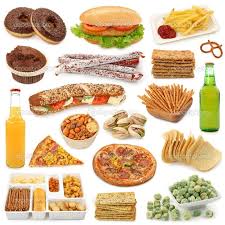
  • Bagels
  • Breads, rolls, baked goods
  • Candy, Cake, Cookies, Crackers
  • Cereals (except old fashioned oatmeal)
  • Cornstarch
  • Corn bread & muffins
  • Corn syrup
  • Croissants, Doughnuts
  • Egg rolls
  • Fast food
  • French Fries
  • Fruit juices
  • Fried foods
  • Flour
  • Granola
  • Hard cheese (except for feta and grating cheeses, such as Romano and Parmesan)
  • Honey
  • Hot dogs
  • Ice cream, frozen yogurt
  • Jams, preserves
  • Margarine
  • Molasses
  • Muffins
  • Noodles
  • Pancakes, Pastry
  • Pie, Waffles
  • Pita bread
  • Pizza
  • Pasta
  • Popcorn
  • Potatoes
  • Pudding
  • Relish
  • Rice
  • Sherbet
  • Shortening
  • Snack foods (i.e. potato chips, pretzels, corn chips, rice cake, etc.)
  • Soda, Sugar
  • Tacos, Tortillas


General rule is that the more highly processed a food is (i.e. refined carbohydrates, saturated fats), the more it will increase inflammation via cytokine release, so limit your exposure to processed foods.
Additionally, the fat from sick animals (conventionally farmed) is linked to a host of inflammatory conditions and other health challenges.  So limit your exposure to fat content from conventionally farmed animals.

Omega-6 fats are also pro-inflammatory.  Rich sources include corn, safflower, sunflower, cottonseed and soybean oils.  These are essential fats, but the optimal ratio between anti-inflammatory (omega-3 oils) and these pro-inflammatory omega-6 oils is 1 part (omega-3):4 parts (omega-6).  In North America, unless we are intentionally choosing more omega-3 fats, we tend to consume closer to 1 part (omega-3):10-20 parts (omega-6).  This obviously imbalances the body’s inflammatory pathways to favor pro-inflammation processes.  Over time, this can lead to diseases whose etiologies are likely due to inflammatory pathways (mentioned above).  It could also aggravate said conditions (worsening symptoms).


3. Consume anti-inflammatory foods


On the contrary, there are many foods that have been shown to reduce inflammation in the body.  Many of these food items are those that gut cells and the body would recognize, because they were present during the bulk of our genome adaptation (i.e. hunter-gatherer span).

Aside from specific identified inflammation reducing foods, it is important to choose foods that provide energy and essential nutrients and do NOT increase inflammation.  These follow:
Carbohydrate sources:  Vegetables and Fruits mostly unprocessed; Quinoa, Wild rice and Old fashioned oatmeal (Scottish large chunks).  These are the optimal choices.  Next, if you consider whole grain products, there will be some inflammation, but less compared with highly processed foods (listed above).

Omega-3 fat rich foods including oily fish (Wild caught Salmon, Herring, Sardines, Arctic Char, Anchovies, Mackerel, Lake Trout are among the best).  Meat and Eggs from exercised (truly free range or run animals) and fed their natural diet (i.e. cows = grass) also have more favorable fatty acid profiles compared to conventionally farmed ones that tend to be not exercised and sick.

Monounsaturated fats are also greatly anti-inflammatory and a great source for fat energy.  Among the richest sources of these are olives, avocados, most nuts and seeds and their unrefined oils.  Tip: the cheapest, extra-virgin version of olives and avocados are the whole fruits themselves, not the oils.  You also get fiber with the healthy unrefined oils when consuming the whole olives and avocados.
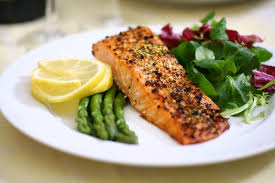
  • Kelp
  • Tumeric
  • Wild caught salmon
  • Shitake mushrooms
  • Green Tea
  • Papaya
  • Blueberry
  • Extra Virgin Olive Oil
  • Broccoli
  • Sweet Potato

 The optimal targets for fat intake are as follows:

A)           Trans fats – None – check the label and be sure it states truly zero.  Any increases risk of heart disease, so avoid.
B)            Saturated fats – limit to < 25 g / day.  Eliminate those from conventional animal products because often toxins are stored here and sick animals would have higher levels of bad fats.  Whenever possible try to choose exercised, naturally fed animals and even certified organic if you can.
C)            Omega 3 and Omega 6 fats.  Choose somewhere between 1:4 or 1:1 ratio between these respectively.  Decide where you will fall in that range based on your inflammation levels.  If you have more inflammation in your body then target closer to 1:1 ratio vs. 1:4.

D)           Monounsaturated fats – these will be the primary focus of your fat intake after you know that you’ve eliminated trans fats, are limiting your saturated and are getting your appropriate target for omega 3 and omega 6 fats.  Most people require between 50 and 100 g of fat/day, depending on your calorie target and what percentage of your energy needs your fat will comprise.  So these will make up the difference in your fat intake goal.


Sample Anti-inflammatory Meal.

Here is an example of an anti-inflammatory meal.  You might have to adjust the portions in order to support your weight management goal.

 3-4 oz Wild caught salmon – lemon, garlic & pepper seasoned + grilled (seared, and then cooked in tinfoil)
2 cups Steamed Broccoli + Spinach
2 Tbsp Olive oil + Balsamic vinegar dressing
½ cup steamed mushrooms + onions in 1 Tbsp Olive oil.

4. Cope Effectively with Stress.

We're starting to better understand that emotional stress is intimately connected to our physiological (& psychological) health.

There is mounting evidence that when under stress, the cells of the immune system are not able to respond to hormonal control & therefore inflammatory levels are reached that promote disease.

Therefore, being able to not allow stress to reach a level that causes this effect is key to preventing risk of inflammatory-induced diseases.

Intense exercise, Yoga, Meditation, Martial arts incorporating focus & zen philosophy, support groups & therapy have all been shown to be great stress management tools.

Do these now.  You can start by trying out some free online exercise session with Trainer C over at Chizle Fitness .

5. Get Adequate Sleep.

More and more studies have shown lately that sleep is inversely associated with inflammation.  For example, people who slept 6 hours or less per night, has higher levels of inflammatory markers fibrinogen, IL-6 and C-reactive protein.

It's critical to get between 7 and 9 hours of sleep per night as this has been associated with lower inflammation & lower disease risk in general.  Furthermore, this sleep should be uninterrupted as much as possible.  Try to sleep in absolute dark, have a wind down ritual that doesn't involve a computer, sleep in a cool room & wake up as gently as possible.

Remember that it's a holistic approach is needed here.  If any of these components are off, then your inflammation will likely be higher & your belly fat will be "resistant" to being used.

Go and give your best!  Try it for 3 months & see what these lifestyle changes can do for you!


Be sure to subscribe to my YouTube channel to start learning the truth about nutrition at home for free!
Dietitian Dan T's Chizle Fuel Channel

Until next time!

Dietitian Dan T

Citations
http://en.wikipedia.org/wiki/Inflammation
http://www.oprah.com/health/Dr-Perricones-List-of-Pro-Inflammatory-Foods#ixzz24krYuVsH
http://www.livestrong.com/article/332010-list-of-pro-inflammatory-foods/#ixzz24ksABi7V
http://theconsciouslife.com/top-10-anti-inflammatory-foods.htm
http://www.sciencedaily.com/releases/2012/04/120402162546.htm
http://www.sciencedaily.com/releases/2010/11/101114161939.htm