Showing posts with label Hormesis. Show all posts

Tuesday, March 4, 2014

Metabolism and Mental Health

Hi everyone!

I'm back from some time away and am thrilled to announce the birth of our second daughter Kathryn!  Kudos to my beautiful wife who delivered her naturally and has been an amazing trooper plowing through breast feeding challenges! Let's just say, there's not a lot of sleep to go around in our home right now!

On to today's topic: Metabolism and Mental Health

I'm constantly disgusted by the preachings & teachings of many of my peers who blindly tow the economically motivated company line!  I'm speaking from both the head and the heart here!

Maybe it's not news to any of you reading this that there is something wrong with the current model of "healthy lifestyles" being touted by North American health care professionals, and I might add is still being taught as the gold standard by many of the educational institutions creating the next generation of said health care professionals!  The sad part of all this is that it's all based on poor research and worse yet, the last 2 decades of evidence has clearly shown that the food pyramids & groupings that are are NOT the answer they are touted to be and could actually be responsible for the obesity epidemic we are now facing.  Denise Minger has done an awesome job illustrating the facts as to why the USDA pyramids since the 1970's are a bad idea in her book Death by Food Pyramid.

In fact, the evidence absolutely opposes regular consumption of a high carb, low fat diet for any prolonged period of time, suggesting that the increased prevalence of mental health conditions over the last 50 years is due to the shifting of public consumption to a low fat, high carbohydrate diet vs. the more traditional, low carb, high fat one (Riby LM and Riby DM, 2013)!

I work at a mental health hospital and I see significant overlap between the mental health conditions that lead to hospitalization (i.e. Anxiety, Depression, Bipolar Disorder, Schizophrenia, Schizoaffective Disorder, Bipolar Affective Disorder, etc...) and the metabolic syndrome that has also become increasingly prevalent in our modern society.  FYI, Metabolic syndrome is defined by having 3 or more of the following conditions (as defined on the Diabetes Canada website):
  • High fasting blood glucose levels (5.6 mmol/L or higher)
  • High blood pressure (130/85 mm Hg or higher)
  • High level of triglycerides, a type of fat in your blood (1.7 mmol/L or higher)
  • Low levels of HDL, the “good” blood cholesterol (lower than 1.0 mmol/L in men or 1.3 mmol/L in women)
  • Abdominal obesity or too much fat around your waist [a waist circumference of greater than 102 cm (40 inches) in men and greater than 88 cm (35 inches) in women]
The more of these conditions you have, the higher your risks of developing type 2 diabetes and heart disease.  I can tell you from my experience, that at least 1-3 of these criteria are met by almost all the clients I come across in mental health.  It's far to common to be mere chance!  In fact, there is research outlining how these metabolic disturbances are linked with mental illness  (Carria G et al. 2014).  I think the best objective review of the evidence linking lifestyle habits with subsequent mental health issues and specifically cognitive decline is in Dr. David Perlmutter's book Grain Brain.

Furthermore, metabolic syndrome has been shown to be associated with poor memory and executive functioning in the elderly (Rouch I et al, 2014). I think we can safely assume that they are at the very least related & that nutrition and our consistent lifestyle habits are intimately involved in the pathophysiologies of these conditions.

One theory as to how this link occurs is through epigenetics or the altering of gene expression within individuals through methylation and other processes that turn on and off of various genes in the body.  Mark Sisson in his book The Primal Blueprint describes becoming a fat burning machine through altering our gene expression to do this.  Evidence is definitely starting to show that consistent lifestyle activities including diet, resistance and aerobic exercise and more do exactly this, alter gene expression of certain genes that favor fat burning and turn off others that would favor fat storage.  Epigenetic changes have been shown to occur in populations with Diabetes as well.  Interestingly, these gene expressions can be either health marker related (which can be tracked) or appetite-generating or suppressing to name a few, which can help explain how processed foods can stimulate people to over-consume them so frequently.  This phenomenon has been demonstrated clinically in a study that examined midlife diet and future phenotype expressions of Healthy Aging.
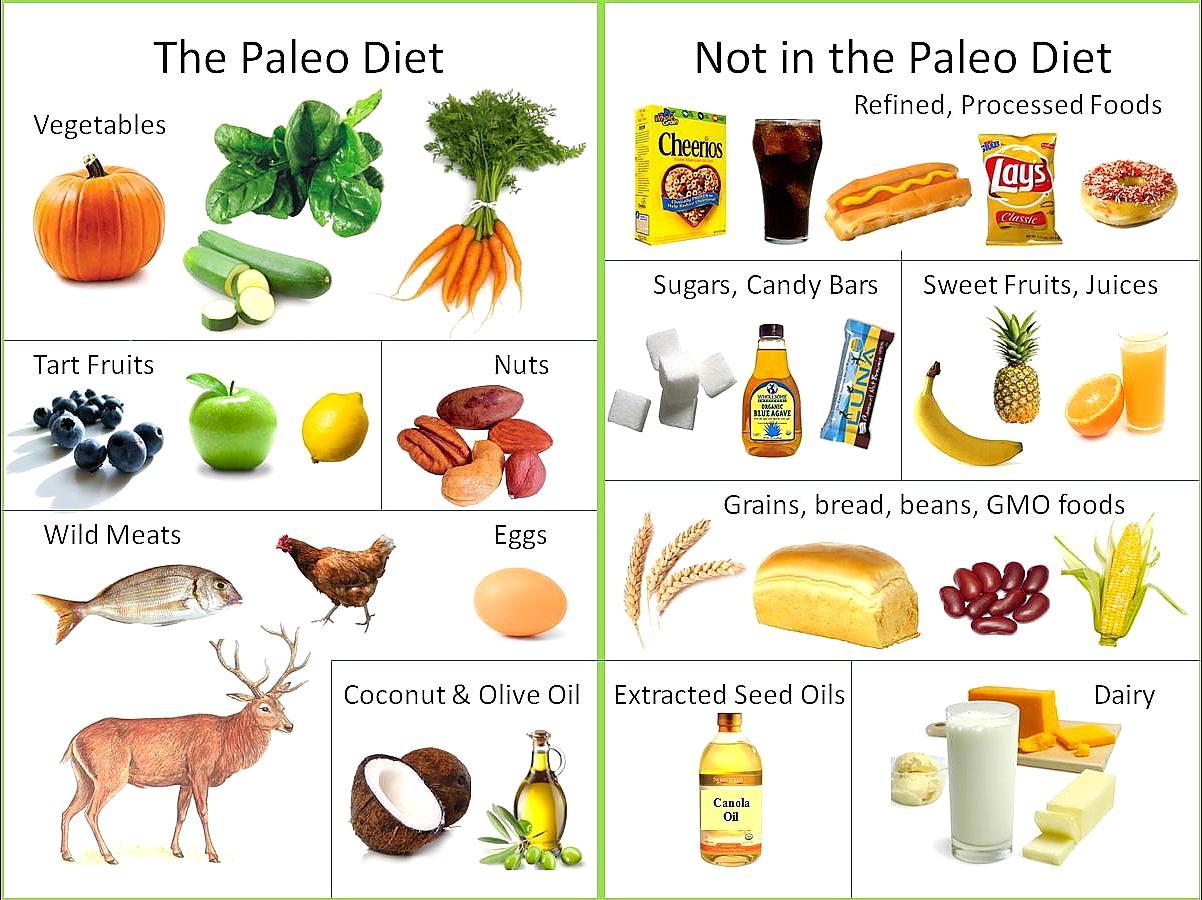


Regardless of mechanisms, there is definitely evidence that suggests we shouldn't be relying, let alone recommending high grain & refined carbohydrate intake (including grains) and that we shouldn't be restricting fat as much as we are now!

Specifically, there are a number of studies linking grain consumption to mental health issues including schizophrenia, depression and bipolar disorder.

 
I will leave you with one closing thought.  Most people know that the body is made of mostly water and if we don't get enough water daily, then we're on the road to problems; so once you understand that the brain is made of mostly fat, it shouldn't surprise you that if we don't consume adequate fat from our diet we are heading down the road to troubles with our brain!  Obviously, the types of fat matter, but this is another post in and of itself!


Anyway, I believe the time is coming for change & I am striving to advocate for it!  It will likely be many years until Government agencies climb aboard, so in the meantime, take control of your and your family's health!

Also, to any and all clinicians reading this, you should try the changes I'm talking about and advocate for change too!  To blindly move forward is irresponsible!


Till next time.  Have a great weekend & Take care!

Dan T

Friday, October 11, 2013

What is the Real Deal behind Preventing Cardiac Risk?


It's been quite a while since my last post.  I am neck deep in preparing for my PhD Comprehensive exam (early Dec 2013), working full time & caring for my almost 2 year old daughter as my wife and I have another child on the way (due Feb 2014).

I have to tell you honestly, that I am constantly disappointed by the current medical profession specifically when it comes to dealing with chronic diseases! As a registered dietitian I see it as my duty to constantly review the literature to see what new innovations might show promise. It's my responsibility to understand these novel studies so that when clients inevitably ask about them, I will be able to give them legit advice & not just tow some antiquated party line!

Okay, enough venting!  Let's dive into some of the newer evidence on Heart Disease Risk!


The Popular Dogma is Not Supported by Current Evidence

1)      Saturated Fat
a.       The current dogma is that eating too many saturated fats increases blood cholesterol, which in turn increases risk for heart disease.

b.      A few studies have shown that there increased levels of LDL increase risk for CHD.

c.       But, recent research concluded that there was in fact no association between dietary cholesterol and CHD.

d.      As of 1977 AMA/CMA recommended lowering fat intake to 30% or less in diet – result=significant change in diet composition - ­ Carb/­ PUFA (specifically vegetable oils – all ­ omega 6).

e.      If we oversimplify and just ask two basic questions, we start to see the challenges that have arisen: i) What about evolution? Did we evolve eating more carbs and seeds & nuts or animal & coconut fats? ii) What about inflammation? Which is more inflammatory in nature: SFA or omega 6 + refined carbs?

2)      Apo lipoprotein Changes
a.       This change in diet comp – resulted in changes to our circulating lipoproteins that actually increase our risk for CHD (specifically - ­ Triglycerides/ ¯ HDL particles).

b.      New technology explains why LDL amount is not as telling as once believed.  Particle size of   Think of cholesterol as the passengers in a car and the particle number is the number of cars on the road.  If there are more particles around then they are more likely to crash into the arterial linings and become trapped (atherosclerosis).  If LDL particles are smaller, there will be more of them present, when they are fluffy and big, and then there will be less of them.  Theoretically, the amount of LDL could be the same in both scenarios, but it’s the small, dense LDL particles (that are more abundant) that increase the risk for CHD.
LDL particle size is far more predictive of atherogenic risk.

3)      The Role of Carbohydrates in CHD
a.       Carbohydrates were pre-farming available in unrefined forms (vegetables & fruits) and only in the late summer and fall.  Today, we have year round access to the most highly refined carbohydrate sources we’ve ever seen.

b.      High carbohydrate intake shuts down fat burning & promotes fat storage.  This increased fat storage leads to an increased production of triglycerides.
c.       Hypertriglyceridemia is accentuated in people with abdominal obesity/insulin resistance.

d.      This insulin resistance occurs in the face of high carbohydrate diets & is now considered a protective measure by the liver to prevent substrate overload.

4)      The Role of Inflammation
a.       Athersclerosis does not occur in a vacuum (so to speak).  Inflammation and oxidation are required to promote infiltration of lipids within the arterial walls and the binding of minerals to them (plaque formation).

b.      High carbohydrate diets & especially refined carbohydrates are highly pro-inflammatory.

c.       Omega 6 fats are essential (small amounts) but in excess are highly pro-inflammatory.  They are highly available in Western diets (corn, soy & wheat oils) as well as most nuts & seeds.

d.      Recent studies have shown that low carbohydrate diets are effective at reducing cardiovascular risk factors.
Citations:
Djousse, L and Gaziano, JM, 2009.
German, JB and Dillard, CJ, 2004.
Agius, L, 2013.

Monday, June 10, 2013

My Take on Hormesis, it's good or bad, depending on the dose!

Hormesis

Today, I want to chat briefly about the concept of Hormesis.

Hormesis is a biological phenomenon likely best known from Toxicology in which a beneficial effect results from a low dose exposure to an agent (or a practice) that can become otherwise toxic or lethal when given at higher doses.  You will often see Hormesis denoted by a U or J shaped curve (often inverted).  Here is a nice image that I think illustrates Hormesis well.  You can clearly see that there is a range of dosing that produces beneficial (healthy) results, and then either too little or too much produces negative outcomes.  This, in a nutshell is Hormesis.


To clarify, let's examine a couple examples.

1) Exercise.  It is widely known that exercise can have a plethora of benefits to human health & longevity, including altering gene expression over the long run to make humans more efficient at partition energy for expenditure and hence improving overall health.  However the dosing is key, and everyone's tolerances and genetic propensities are different.  Take running and cardiovascular disease prevention.  This has been a long-standing recommendation, and often dosing specific recommendations are avoided in Medicine, because "not enough is known".  If we explore the literature on this topic we see that mild endurance activity seems to be protective against cardiovascular disease, but higher doses of endurance training actually increase risk for cardiovascular disease.  A working theory of the benefits obtained from exercise is that exercise stresses our system through oxidative stress and our body has to mount a response to this.  As long as we can respond adequately, we gain benefit from exercise.  If the stress load is too great to mount a response (i.e. too high exercise volume) then it ceases to be beneficial and become toxic.

2) Antioxidants.  We see another example of hormesis from studies showing that high dose antioxidant supplementation (i.e. >1 g Vit C/day) while exercising actually blunts the beneficial gains from that exercise by blocking adaptation to the exercise conditions.  This is another example of hormesis, because lower antioxidant supplementation helps to speed recovery and even contribute additive health benefits to the exercise, however, when the dose is too great, then the adaptation goes away and it becomes toxic.  Additionally, high level supplementation with many antioxidants has been shown to be pro-oxdiative, again because our bodies respond to mild oxdiative stressors within compounds we call antioxidants by producing increased levels of antioxidants.  If the load of the stress is too great then we can't respond adequately and the result is increased oxdiative stress and negative health consequences.

3) Ketosis.  This is one of my favorite examples and I was first made aware of it from the Robb Wolf Paleo solution podcast in which he and Greg Everett interviewed Dr. Kurt Harris.  Be sure to check out their blogs and podcasts for a ton more info on cutting edge nutrition research! The concept of the benefits of ketosis has been bounced around for some time, especially revolving around fat loss.  Certainly, most conventional health circles avoid it or chastise it due to confusion with the potentially life-threatening ketoacidosis that can occur in diabetes.  However, in and of itself ketosis can be extremely beneficial in that it facilitates adaptation by the human body to a fuel source other than glucose, specifically ketone bodies produced by breakdown of fatty acids.  There's more to this and perhaps I will discuss more details in a later post, but I think this is adequate to briefly introduce the concept of Ketosis for the purposes of this discussion.  Anyway, this is also an example of hormesis, as there is literature supporting ketosis for fat loss, stimulating autophagy, starvation of tumors in cancer and reversal of the symptoms of the metabolic syndrome (insulin resistance, low HDL, elevated triglycerides, central adiposity and high blood pressure).  As a Dietitian, I've counseled many people who were staying in ketosis for various reasons and what was interesting, was that once people corrected a metabolic derangement or achieved a fat loss goal, if they persisted with ketosis year round, with no increase in (good quality) carbohydrate intake above 50 g per day, then they started to face some issues counter productive to health, performance and longevity.  Most often, this would arise in individuals who perform a glycolytically demanding activity (i.e. crossfit or high intensity training or other sport) in which the lack of carbohydrates causes them to crash during their activity due to failure to replenish muscle stores of glycogen for the next bout.

Please feel free to comment with your questions or any topics you would like to see in future posts.


Great blogs that define Hormesis.
http://gettingstronger.org/hormesis/
http://www.dose-response.org/pdf/HETDEFININGHORMESIS.pdf 
Figure represented from: http://www.nutritionandmetabolism.com/content/7/1/87/figure/F1?highres=y